

Markets are digesting the post‑pivot rate backdrop, a heavy slate of consumer and chip earnings, and policy headlines that can sway yields and sentiment. Retail results will shape expectations for holiday spending, while the Fed’s meeting minutes, housing reports, and flash PMIs update the growth-vs-inflation narrative. Energy and budget developments add another layer to the outlook.
Retail Earnings And Holiday Spending In Financial News
Retailers take the stage. Big-box and home-improvement chains will outline the health of the U.S. consumer as the holidays begin. The focus is on traffic, promotions, and margins. Consumers remain value-sensitive. Promotional intensity is likely to be high. Strong execution can still protect profitability.
Watch these themes in the results and guidance:
- Inventory discipline. Leaner stock levels can reduce markdown risk.
- Mix and margins. Private-label and essentials can support profits when shoppers trade down.
- Omnichannel. Curbside pickup and logistics efficiency remain a competitive edge.
- Home spend. DIY vs. big-ticket categories will signal the rate impact on housing-adjacent demand.
Semiconductors also matter this week. AI infrastructure demand remains a pillar for data center spending. Supply chains are healthier than last year, but backlogs and lead times still guide shipment cadence. The market keeps rewarding recurring revenue, cash flow, and clear capital allocation. Companies that miss on monetization or guide cautiously tend to see quick resets.
US Market Performance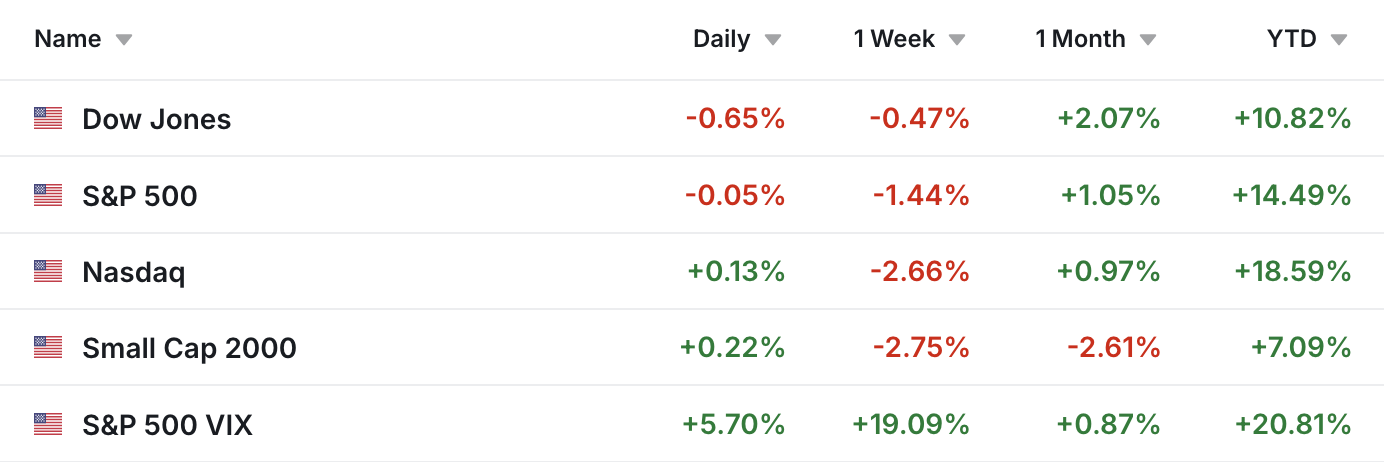
Fed Minutes, Housing, And Oil: Policy In Financial News
Policy tailwinds are still in play. The Fed’s recent pivot toward easier policy and the planned end to balance sheet runoff in December have eased longer yields. The meeting minutes will clarify how officials view inflation progress and growth risks. Markets care most about the pace of future cuts and the balance between inflation vigilance and financial stability.
Housing data arrive at an important time. Starts, permits, and existing home sales will show how lower mortgage rates are filtering into activity. Affordability remains tight. A modest rate relief can still help new construction, while existing inventory stays constrained.
Oil is another swing factor. Crude prices have reacted to supply signals and inventory trends ahead of late‑month OPEC+ deliberations. Oil swings can lift headline inflation and feed back into rate expectations. That can nudge the term premium and risk appetite across sectors.
Politics is part of the calculus. Government funding negotiations and deficit dynamics can shift Treasury supply and long-end yields. A smoother budget path tends to calm rate volatility. A rocky path can keep the term premium sticky. The practical takeaway is simple: balance growth exposure with quality income and some duration to buffer surprises.
This Week: Key Economic Data
Monday: NAHB Housing Market Index
Tuesday: Housing Starts; Building Permits
Wednesday: FOMC Minutes (latest meeting); Weekly EIA Petroleum Status Report
Thursday: Weekly Jobless Claims; Philadelphia Fed Manufacturing Index; Existing Home Sales; Conference Board Leading Economic Index
Friday: S&P Global Flash PMIs (Manufacturing and Services)
This Week: Companies Reporting Earnings
Retail, chips, and industrials headline the calendar. Notable reports include the following:
- Walmart (WMT)
- Home Depot (HD)
- Target (TGT)
- Lowe’s (LOW)
- NVIDIA (NVDA)
- Cisco Systems (CSCO)
- Applied Materials (AMAT)
- Deere & Company (DE)
- Palo Alto Networks (PANW)
- Macy’s (M)
- Gap (GPS)
- Kohl’s (KSS)

Tax Tip: RMDs And QCDs—Two Smart Year‑End Moves
Required Minimum Distributions (RMDs) are due by December 31 for most IRA and plan owners age 73 or older. Confirm the correct amount with your custodian and avoid the 25% excise tax on shortfalls. Charitably inclined taxpayers age 70½ or older can use a Qualified Charitable Distribution (QCD) to transfer up to $100,000 per year directly from an IRA to a qualified charity. A QCD can count toward the RMD and is excluded from taxable income, which may help with Medicare premium brackets and deduction thresholds. Ensure the transfer goes directly to the charity and keep written acknowledgements for your records.
This information is not a substitute for individualized tax advice. Please consult with a qualified tax professional to discuss your specific tax issues.
Tip adapted from IRS.
Footnotes and Sources
- CNBC Finance: Markets and financial news
- Bloomberg Markets: Global market data and analysis
- Wall Street Journal: Markets and earnings coverage
- Federal Reserve: FOMC calendar and minutes
- U.S. Census: New Residential Construction (Housing Starts and Permits)
- NAR: Existing Home Sales
- S&P Global: Flash PMI releases
- U.S. EIA: Weekly Petroleum Status Report
- The Conference Board: Leading Economic Index
- Philadelphia Fed: Manufacturing Business Outlook Survey
- IRS: Required Minimum Distributions (RMDs)
- IRS: Qualified Charitable Distributions (QCDs)

Wesley Samson
Wesley@samsonfinancial.net
863-345-0538
Samson Financial, LLC.
https://samsonfinancial.net