
This week’s financial news arrives with Tesla charging higher, NVIDIA gaining momentum, SpaceX stock surging 7%, and crude oil holding above $91 a barrel — just as OPEC+ announced on Sunday that it will keep oil output steady for November.
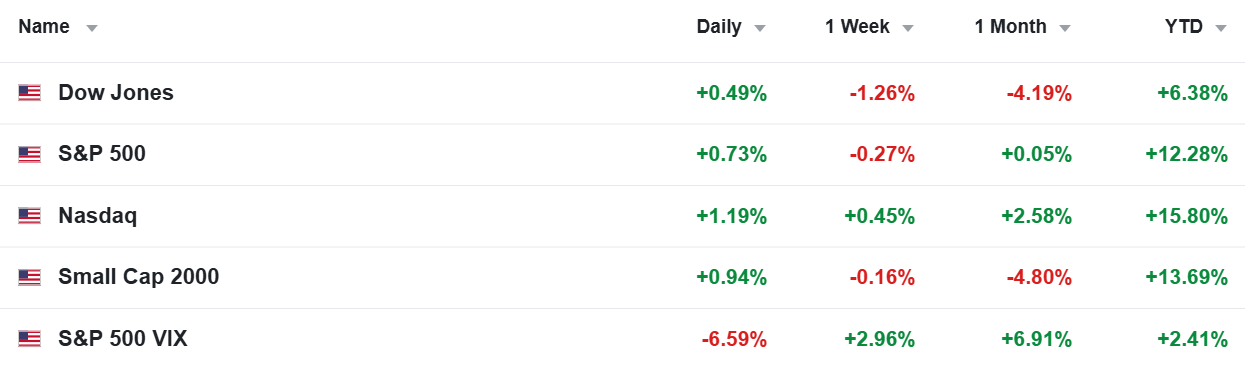
Markets are entering October with a familiar balancing act. The S&P 500 is holding near 7,732, gold remains elevated above $4,144, and the energy market remains in the spotlight as OPEC+ extends its production pause and Iran-related supply dynamics keep crude oil stubbornly elevated. For the week ending Friday, October 2, the S&P 500 slipped 0.27%, the Dow fell 1.26%, and the Nasdaq edged up 0.45%. Tesla’s 4.65% surge and NVIDIA’s 1.34% gain are giving the technology and EV space a lift — while Seagate’s stunning -10.21% drop and SanDisk’s -3.79% decline are reminders that not every hardware name is riding the AI wave equally. The week ahead brings the minutes from the Fed’s September meeting, an early read on consumer sentiment, and PepsiCo and Delta kicking off third-quarter earnings — with the big banks and the September inflation report following the week after.
Tesla, NVIDIA, and SpaceX Rally: What the EV, AI, and Space Trade Means for Investors
Tesla’s 4.65% surge to $370.59 — on heavy volume of more than 55 million shares — is one of the week’s most eye-catching financial news moves. The catalyst reflects a mix of factors that have fueled periodic Tesla rallies throughout 2026: renewed optimism around autonomous driving progress, strong delivery data, and the growing narrative that Tesla is a technology and AI company as much as an automaker. In a market that rewards monetization evidence, Tesla’s delivery numbers and any commentary on Full Self-Driving (FSD) licensing prospects are the data points investors are watching most closely.
The even more striking story is SpaceX (SPCX), which surged 7.35% to $158.96 on volume of nearly 120 million shares — making it one of the week’s highest-volume movers. Since its record-setting Nasdaq IPO in June at $135 a share, SpaceX has quickly become one of the most actively traded names in the market, and its shares now sit well above that offering price. A surge of this magnitude signals growing institutional and retail interest in space economy exposure — particularly as Starlink’s commercial satellite internet business continues to scale globally and Starship development milestones draw attention.
What these moves signal for investors following the technology and innovation space:
- The EV-AI-Space convergence trade is back in focus. Tesla, NVIDIA, and SpaceX exposure collectively represent a bet on an AI-driven, electrified, and eventually space-enabled economy. This week’s gains across all three names suggest that institutional money is rotating back into this cluster of secular growth themes.
- NVIDIA’s 1.34% gain to $233.95 confirms AI infrastructure demand holds. Despite recent volatility in chip stocks, NVIDIA’s continued bid on elevated volume reflects persistent data center demand. AI compute buildout has not paused — it has matured into a more selective but still robust spending cycle.
- AMD’s 2.95% gain adds breadth to the chip rally. Advanced Micro Devices gaining alongside NVIDIA suggests that the AI semiconductor story is not a one-company narrative. Investors are diversifying their chip exposure across both the GPU market leader and its chief challenger.
- Seagate’s -10.21% plunge is a warning about hardware selectivity. Not all semiconductors and storage companies are benefiting equally from AI infrastructure demand. Seagate’s sharp decline — the week’s biggest loser among major names — is a reminder that component-level earnings risk within the broader tech sector is real and can materialize quickly.
For diversified portfolios, the lesson is the same one the market has been delivering all year: quality monetization, recurring revenue, and earnings discipline separate the leaders from the laggards. Tesla, NVIDIA, and SpaceX all have identifiable catalysts and measurable demand signals. Seagate’s plunge illustrates what happens when those signals disappoint.

US Market Performance – Week Ending 10/2/2026
OPEC+ Holds Output Steady as Oil Tops $91: How Energy Policy Is Shaping the Market
On Sunday, October 4, OPEC+ agreed to keep its November oil production targets unchanged, extending its pause on output increases for a second straight month. The group will keep its existing production cuts in place through year-end and will meet again on November 1. The decision comes with crude oil WTI holding above $91 a barrel.
Crude oil’s 0.84% gain to $91.09 keeps the energy market in territory that is materially inflationary. The ongoing U.S.-Israeli military campaign against Iran has maintained a war risk premium in oil that has now persisted for months — and as long as the Strait of Hormuz remains a potential flashpoint, the market cannot sustainably price out that premium. JPMorgan’s admission in September that it no longer maintains a clear oil baseline view underscores just how unusual and difficult this pricing environment has become.
Here is how the OPEC+ decision and elevated crude are filtering into markets and portfolios this week:
- Steady supply keeps the floor under oil prices. By holding output flat rather than adding barrels, OPEC+ is signaling it is comfortable with prices at current levels. That removes one potential source of relief for consumers and businesses facing high fuel costs heading into winter.
- Oil above $91 keeps inflation pressure elevated. The PCE and CPI readings that follow a sustained period of $90+ crude will reflect that energy cost reality. That dynamic keeps the Fed’s path uncertain after September’s rate hike — and makes the September CPI report on October 14 especially important.
- Energy sector names benefit from elevated crude. Integrated majors, producers, and refiners are operating with strong realized prices and margins at these oil levels. Q3 earnings guidance from energy companies will be closely watched given how limited forward oil visibility has become.
- Geopolitics and energy are tightly linked. OPEC+ decisions reflect U.S.-Saudi diplomatic dynamics, Iran supply disruptions, and global demand forecasts. Washington’s Middle East policy and its energy implications remain among the most consequential forces in today’s market.
The steady portfolio takeaway: energy exposure remains a relevant inflation hedge and a strong earnings contributor at current crude levels. Balanced positioning across the energy complex — producers, integrated majors, and select refiners — alongside quality growth and income assets helps manage a range of possible oil outcomes without concentrating all risk on a single price assumption.
This Week: Key Economic Data
Monday: ISM Services Index (September); S&P Global Services PMI (final, September)
Tuesday: Consumer Credit (August); U.S. Treasury note auctions
Wednesday: FOMC Minutes (September meeting); EIA Weekly Petroleum Status Report
Thursday: Weekly Jobless Claims
Friday: University of Michigan Consumer Sentiment (Preliminary, October)
Looking ahead: the September Consumer Price Index (CPI) arrives Wednesday, October 14, followed by the Producer Price Index (PPI) on Thursday, October 15.
This Week: Companies Reporting Earnings
It is a light week for earnings as the third-quarter reporting season gets started. The major banks begin reporting the following week, led by JPMorgan Chase on Tuesday, October 13.
- PepsiCo (PEP) — Thursday, October 8
- Delta Air Lines (DAL) — Friday, October 9

Tax Tip: Keep Well-Organized Records — The Foundation of Every Smart Tax Strategy
As Q3 ends and the final quarter of the tax year begins, well-organized recordkeeping is more valuable than ever. The IRS requires taxpayers to retain receipts, brokerage confirmations, canceled checks, and other documents that support income, deductions, or credits appearing on a return for as long as those records may be material under any provision of the Internal Revenue Code.
Practically, that means the statute of limitations for IRS assessment runs three years from filing for most returns — but extends to six years if more than 25% of income was omitted, and there is no limitation period at all in cases of fraud or failure to file. For investment property — stocks, real estate, digital assets, and emerging asset classes like tokenized securities — records should be maintained for the entire holding period plus the applicable assessment window after disposition. Three high-value recordkeeping moves to make right now:
- Document all investment transactions through Q3. Capture purchase dates, cost basis, and any sales or exchanges — including crypto and digital asset trades, which the IRS treats as taxable dispositions just like stock sales.
- Update property and improvement records. For real estate, the cost basis includes original purchase price plus qualifying capital improvements. For inherited assets, the stepped-up basis at date of death must be documented and retained.
- Organize healthcare, business, and charitable records now. Medical expense deductions, home office claims, business mileage logs, and charitable contribution records all require substantiation that is far easier to locate in October than in April.
This information is not a substitute for individualized tax advice. Please consult with a qualified tax professional to discuss your specific tax issues.
Tip adapted from IRS.
Footnotes and Sources
- Investing.com: Market data — NVDA, TSLA, SPCX, STX, SanDisk, Crude Oil WTI, Gold, S&P 500, Nasdaq 100 (Friday close, October 2, 2026)
- CNBC Finance: Markets and financial news
- Bloomberg Markets: Global market data and analysis
- Wall Street Journal: Markets and earnings coverage
- WSJ Markets: Q3 Earnings calendar
- PepsiCo: Third-Quarter 2026 results timing
- Delta Air Lines: September Quarter 2026 results webcast
- OPEC: Press releases and meeting communications
- The National: OPEC+ keeps oil output targets unchanged for November (October 4, 2026)
- U.S. EIA: Weekly Petroleum Status Report
- U.S. Treasury: Daily yield curve rates and auction details
- Federal Reserve: FOMC calendar, minutes, and monetary policy resources
- Bureau of Labor Statistics: Consumer Price Index (CPI)
- Bureau of Labor Statistics: Producer Price Index (PPI)
- ISM: Services Report on Business
- University of Michigan: Surveys of Consumers
- IRS: How Long Should I Keep Records?
- IRS Tax Topic 409: Capital Gains and Losses

Wesley Samson
Wesley@samsonfinancial.net
863-345-0538
Samson Financial, LLC.
https://www.samsonfinancial.net